Death Tarot Card

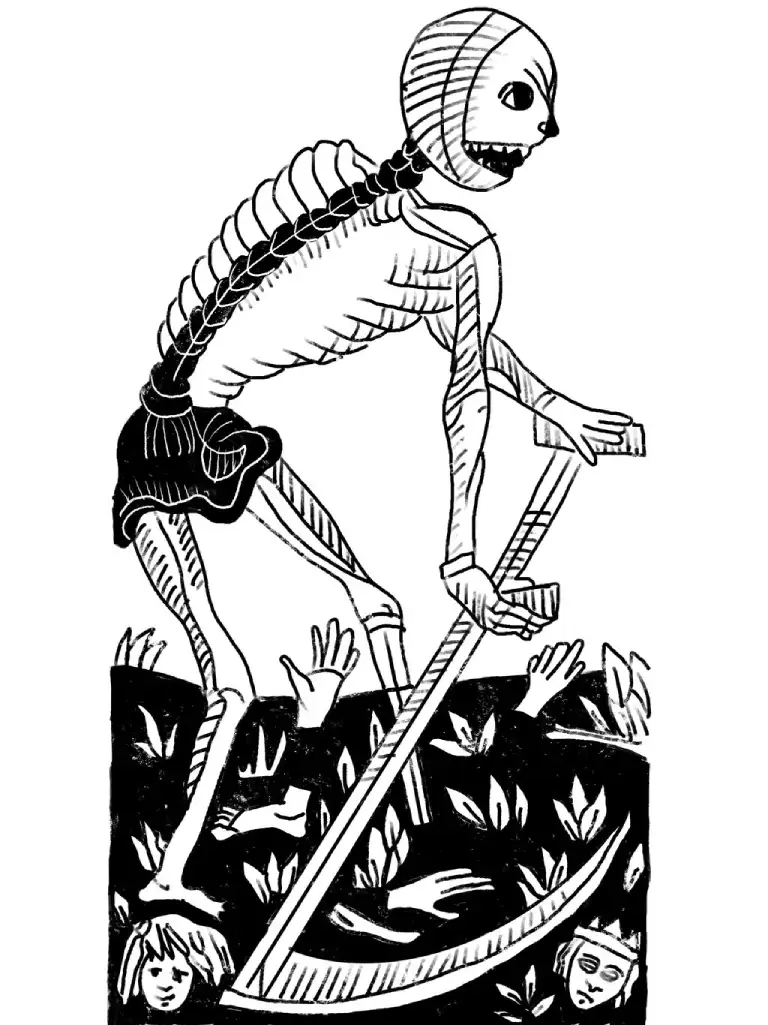
Death card from the Marseille tarot, showing a skeleton with a scythe cutting down figures and plants.

Symbols

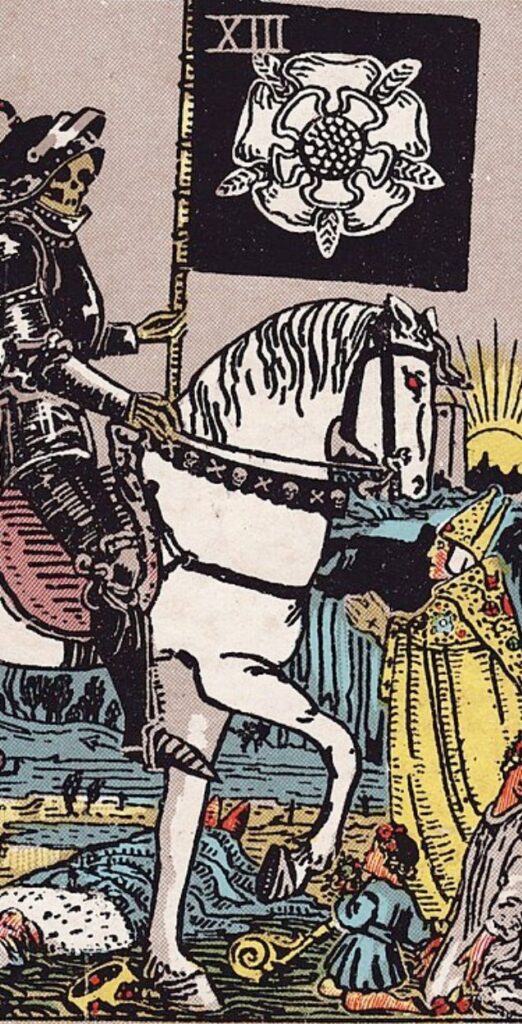
Skeleton on horseback, Black armor, White rose, Flag, Rising sun, River, Dead king, Figures kneeling (bishop, child, and woman)

Qualities

Transformation, Endings, Rebirth, Transition, Renewal, Change, Letting go, New beginnings

Symbology

The Death tarot card transcends its ominous façade, revealing profound transformation and rebirth. It serves as a powerful symbol of change, renewal, and personal evolution.
In the Death card of the Rider-Waite deck, a skeleton clad in black armor rides a white horse. The black armor represents invulnerability, showing that death and transformation are unavoidable forces. The white horse, a symbol of purity, suggests that death is not to be feared but embraced as a natural part of life’s cycles. The horse is draped with a banner bearing a five-petaled rose, which signifies spiritual regeneration, purity, and the interconnectedness of all stages of existence – from bud to bloom, decay, and rebirth.
In the background, the sun both sets and rises, highlighting the inevitable cycle of endings and new beginnings, urging acceptance of the constant flux of life. The river flowing through the scene symbolizes the continuous flow of time and change. Meanwhile, a bishop, a child, and a maiden – representing spiritual authority, innocence, and youth – kneel before Death, acknowledging that no one is exempt from this force. Even the king, already fallen, shows that worldly power cannot stop the inevitability of transformation. The entire scene underscores that all aspects of life must surrender to change, no matter their status, age, or wisdom.
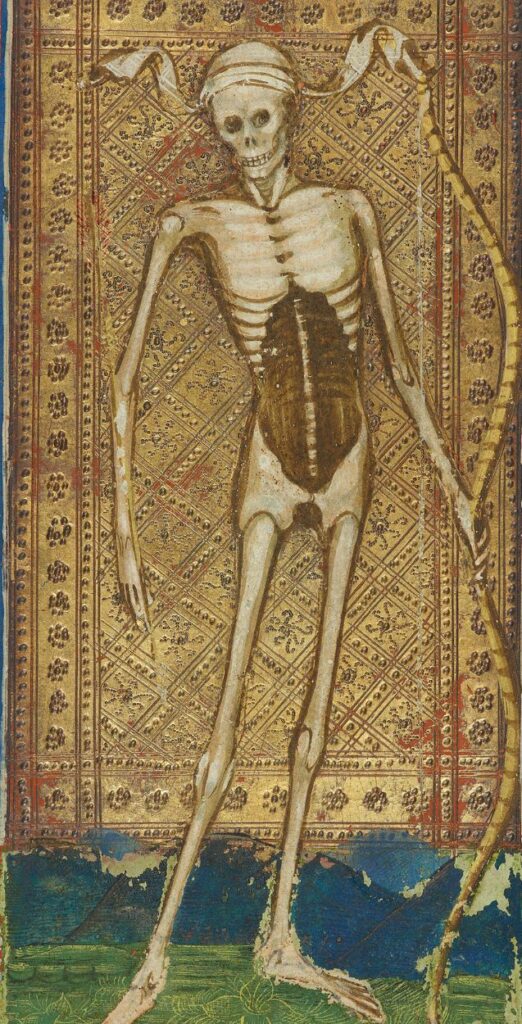
The Death card from the 15th-century Visconti-Sforza tarot, showing a skeleton figure with a scythe.
The Death card in the Visconti-Sforza tarot deck.
The Death card from the Rider-Waite tarot, showing a skeleton knight on horseback carrying a black banner.
The Death card in the Rider-Waite tarot deck.

Meanings & Keywords

The Death tarot card, similarly to its predecessor, The Hanged Man, invites seekers to embark on a journey of transformation. It also offers insights into the cyclical nature of life, renewal, and the inevitability of change. The Death card urges individuals to confront the concept of endings, encouraging them to release the old to make room for new beginnings. Now, let’s delve into the meanings of the Death card in both upright and reversed positions.

Upright Meaning

In its upright position, the Death card in the Rider-Waite Tarot deck unfolds a narrative of profound transformation and renewal. Acting as a harbinger of radical change, this card symbolizes the inevitability of metamorphosis.
Embracing the concept of endings, the Death card becomes a catalyst for individuals to liberate themselves from the shackles of the past, creating space for new beginnings. It serves as a symbolic closure, signifying the completion of a significant phase in life and encouraging the acceptance of the cyclical nature inherent in existence.
As we said before this card is far from representing a dire end. The death tarot card embodies the essence of evolution and growth. It underscores that the cessation of one aspect of life paves the way for a positive and rejuvenating transition, where the old makes way for the new, and profound transformations become the gateway to a brighter future.

Upright Keywords

Transformation – Renewal – Endings – Change – Transition – Rebirth – Evolution – Acceptance – Growth – New Beginnings

Reversed Meaning

In its reversed position, the Death card unfolds a narrative of reluctance and resistance to change. This manifestation can take the form of a fear of letting go, a persistent adherence to outdated patterns, or an inherent inability to stride confidently into the future.
The reversed Death card serves as a cautionary sign, urging against the avoidance of necessary transformations that could lead to stagnation and the overlooking of valuable opportunities. Its presence may indicate lingering issues left unresolved or a steadfast refusal to release ties to the past. This reversed state prompts a careful examination, emphasizing the need to identify and address what must be released or transformed. By doing so, one can avoid the pitfalls of lingering endings that act as hindrances to personal development and impede the path of growth.

Reversed Keywords

Resistance – Stagnation – Fear of change – Inability to let go – Delayed transformation – Unresolved issues – Stuck in the past – Refusal to release – Lingering endings – Missed opportunities

Key Symbols

The Skeleton on horseback

A pivotal element in the Rider-Waite Tarot’s Death card is the skeletal figure gracefully mounted on a horse. This striking image draws upon the timeless archetype of the Grim Reaper, embodying the impartial force of death – the universal equalizer that extends its influence to every being. The skeletal rider, the personification of Death, pays no heed to distinctions of gender, age, or social standing; it comes to all, be they woman, man, old or child, rich or poor, without regard for status or station.
The stark representation of the skeleton serves as a poignant reminder that everything and everyone must undergo the transformative process of death to make way for the renewal of life in another form. Adorned in black iron armor, symbolizing the metal of Mars, the color black conveys the intentional and purposeful nature of Death’s destruction.
The choice of a white horse as the steed for Death holds symbolic significance. Representing purity, the white horse also serves as a vessel for the journey into the unknown. The color white further symbolizes that Death does not act with malevolence; it is not an embodiment of evil. Instead, Death solely represents transformation – a natural and essential aspect of the cycle of life.
Together, the skeletal rider and the white horse form a powerful symbol of the inevitability of change. This dynamic duo prompts contemplation on the cyclical nature of existence, inviting reflections on spiritual growth and the profound transformations that unfold in the face of mortality.

The other figures

In the Rider-Waite Tarot deck, the Death card features additional figures bowing before the skeletal rider, enhancing the depth of its symbolism. These figures include a bishop, a child, and a maiden. Each represents different stages of life, symbolizing the universality of death as an inevitable force that transcends age, status, and experience.
The presence of these figures emphasizes the collective aspect of the transformative journey, underscoring that death is a shared experience that unites all. The inclusion of the bishop, child, and maiden serves as a poignant reminder of the impartiality of the transformative forces at play, urging us to acknowledge and accept the inevitability of change across the various phases of our lives.

The five-petaled rose

The Death card, in the Rider-Waite, features a symbolic banner adorned with a five-petaled rose. This floral emblem signifies spiritual regeneration, emphasizing the potential for growth and renewal that arises from the transformative forces at play. The rose, with its multi-layered symbolism, adds depth to the narrative, suggesting that beauty and vitality can emerge even in the face of profound change.

More Tarot Insights

Born Under a Rising Sign

The definitive book on the Ascendant is out now.
Understand your Rising Sign like never before.