This blog post contains affiliate links. Visit the full disclosure to know more.
Wondering how many cards belong in a Tarot deck? The quick answer is: in traditional Tarot decks – both historic and modern ones – there are 78 cards. These 78 cards are divided into two main groups: the Major Arcana and the Minor Arcana. But what exactly qualifies as a “standard” deck, and why 78 cards? Let’s dive in.
Traditional Tarot decks
What exactly do we mean by a “standard” Tarot deck? To understand this, it helps to look back at the history of Tarot itself. Some of the oldest and most influential decks, like the Visconti Tarot and the Marseille Tarot, each contain 78 cards, divided into Major and Minor Arcana. This 78-card structure laid the groundwork for what most readers today consider “standard.”
Fast-forward to modern times, and the most popular deck in English-speaking countries is the Rider-Waite Tarot. Like its historical predecessors, it also includes 78 cards. This consistency isn’t accidental; the Rider-Waite deck was directly inspired by earlier traditions, especially the Marseille deck.
These decks form the foundation of most modern Tarot practice. We’ve highlighted them in our article on the Best Tarot Cards.
Despite their stylistic differences, all of these traditional decks share the same core structure:
- Major Arcana: 22 cards that represent life’s big themes, archetypal figures, and profound spiritual lessons.
- Minor Arcana: 56 cards divided into four suits each reflecting day-to-day experiences, emotions, and challenges.
How many Major Arcana cards?
A traditional Tarot deck features 22 Major Arcana cards, often viewed as the backbone of the Tarot. As said, they represent key life lessons, archetypal themes, and spiritual milestones.
While numbered from 0 to 21, these cards transcend ordinary suits and carry a deeper, more universal meaning. Below is a concise overview of each Major Arcana card.
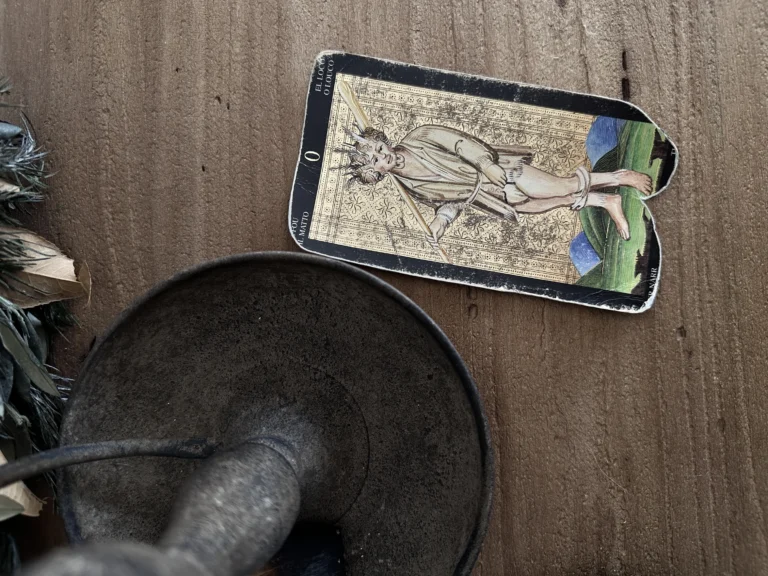
- 0 – The Fool: New beginnings, spontaneity, and boundless potential
- I – The Magician: Willpower, manifestation, and resourcefulness
- II – The High Priestess: Intuition, hidden knowledge, and mystery
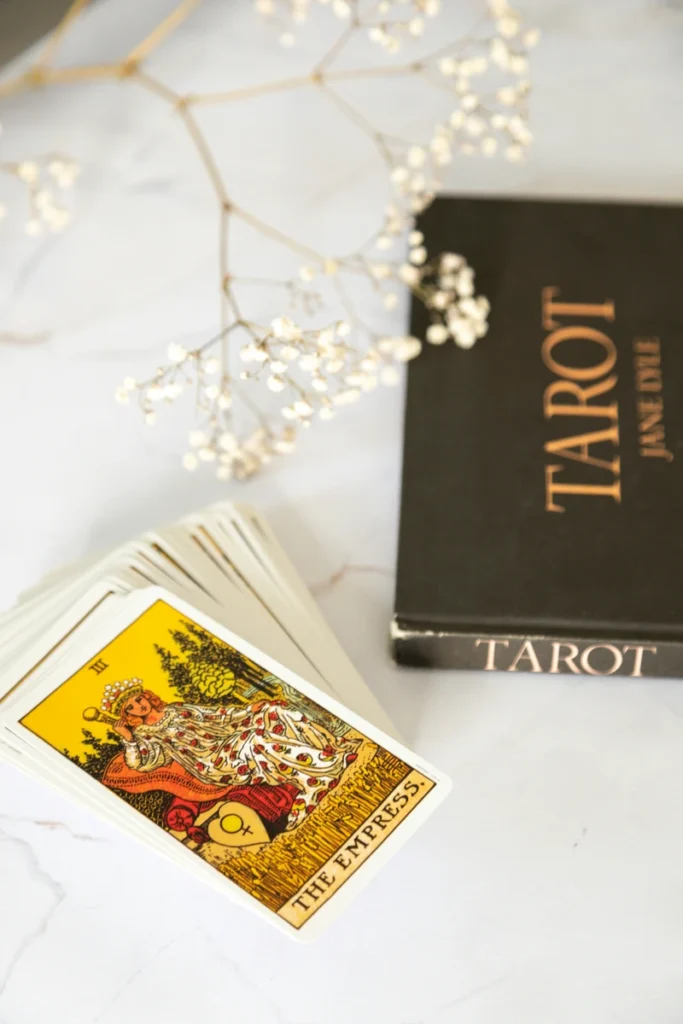
- III – The Empress: Creativity, nurturing, and abundance
- IV – The Emperor: Authority, structure, and leadership
- V – The Hierophant: Tradition, spirituality, and mentorship
- VI – The Lovers: Partnerships, choices, and harmony in relationships
- VII – The Chariot: Determination, control, and forward momentum
- VIII – Strength: Inner courage, compassion, and resilience
- IX – The Hermit: Solitude, introspection, and inner wisdom
- X – Wheel of Fortune: Cycles, destiny, and the unpredictability of change
- XI – Justice: Fairness, truth, and moral responsibility
- XII – The Hanged Man: Surrender, new perspectives, and release
- XIII – Death: Transformation, endings, and renewal
- XIV – Temperance: Balance, moderation, and cooperation
- XV – The Devil: Temptation, materialism, and inner shadows
- XVI – The Tower: Sudden upheaval, revelation, and radical change
- XVII – The Star: Hope, inspiration, and healing
- XVIII – The Moon: Intuition, subconscious fears, and dreams
- XIX – The Sun: Joy, vitality, and success
- XX – Judgement: Rebirth, reflection, and spiritual awakening
- XXI – The World: Completion, wholeness, and fulfillment
The 22 Major Arcana are numbered from 0 (The Fool) to 21 (The World), forming a symbolic journey rather than a simple sequence.
How many Minor Arcana cards?
A standard Tarot deck contains 56 Minor Arcana cards, divided evenly into four suits.
Each suit has 14 cards: ten numbered cards (Ace through 10) and four Court cards (traditionally Page, Knight, Queen, and King). Together, they portray everyday situations, practical challenges, and personal dynamics.
Below is a brief overview of the four suits:
Wands (Staves/Rods)
Element: Fire
Theme: Ambition, creativity, energy, and passion.
Focus: Projects, inspiration, and the spark that drives action.
Cups (Chalices)
Element: Water
Theme: Emotions, intuition, relationships, and inner feelings.
Focus: Matters of the heart—love, compassion, and emotional connections.
Swords
Element: Air
Theme: Thought, logic, conflict, and clarity.
Focus: Intellectual challenges, communication, and decision-making.
Pentacles (Coins/Disks)
Element: Earth
Theme: Material stability, finances, health, and practicality.
Focus: Work, security, and tangible results in daily life.
Common misconceptions about Tarot card numbers
Tarot is often simplified or misrepresented. These following questions reveal where confusion often begins.
Why some people think there are 21 cards
This usually comes from counting only the numbered sequence of the Major Arcana while excluding The Fool. Since The Fool is labeled as 0, it is sometimes overlooked, leading to the incorrect assumption that there are 21 cards instead of 22.
Why the “23rd card” appears in searches
There is no 23rd card in traditional Tarot. This question often emerges from confusion with oracle decks, custom expansions, or simple misnumbering. In some cases, it reflects a misunderstanding of how the Major Arcana sequence works.
Differences between decks and numbering systems
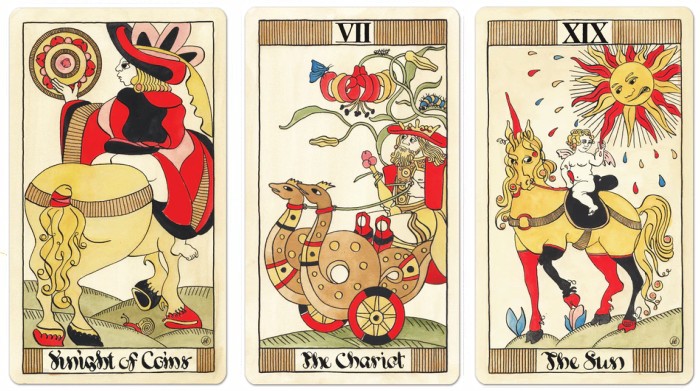
While the total number of cards remains 78, some traditions assign different numbers to specific cards. For example, in the Marseille Tarot, Strength and Justice may appear in a different numerical order compared to the Rider-Waite Tarot. These variations do not change the structure of the deck, but they do influence interpretation and symbolic emphasis.
Non-Traditional decks and Oracles
Not all Tarot decks follow the standard structure of 78 cards. Some decks experiment with additional cards, fewer cards, or entirely unique systems, offering fresh perspectives on the Tarot tradition – and sometimes venturing beyond it altogether.
Tarot decks with added cards
Certain historical and contemporary decks include extra Major Arcana cards or modified suits.
A notable example is the Ancient Minchiate Etruria deck, a Florentine design dated to around 1725, which contains 97 total cards rather than the usual 78. This expanded format features 41 Major Arcana (instead of the traditional 22), with variations such as removing the Papess and adding cards like the Grand Duke. Such differences can offer richer symbolic layers but also require you to learn an alternative system.
Tarot decks with fewer cards
On the other end of the spectrum, some decks reduce the number of cards, perhaps by omitting certain suits, court cards, or even entire sets of Major Arcana. While these may be called “Tarot,” they often function more like specialized or experimental decks. It’s important to note that not all decks superficially labeled as Tarot actually adhere to Tarot’s established framework; some might be closer to an oracle system in “disguise”…
Oracle decks
Oracle decks are a separate category from Tarot, distinguished by their flexible structure and themes. They can contain any number of cards, fewer than 30 or well over 100, and aren’t bound by the suits or arcana of Tarot. Instead, each oracle deck focuses on specific concepts, archetypes, or energies.
Because of this freedom, oracles can offer a more personalized, intuitive reading experience, but they don’t follow a standardized framework like Tarot.
Curious about oracles and how they differ from Tarot? Check out our best oracle decks list, where we explore a variety of oracle systems unique in design and symbology.
Continue your Tarot journey
Tarot does not end with structure. Once you understand how the deck is built, the real question becomes how you choose, use, and interpret it…