
Many people turn to yes or no tarot readings hoping for a simple answer. But is this method truly accurate?
The short answer is: yes and no tarot readings can provide insight, but they are not meant to function as rigid predictions. Tarot operates through symbolism, archetypes, and intuitive interpretation. Reducing it to a strict “yes” or “no” risks oversimplifying its deeper purpose.
In this article, we will explore the most common yes or no tarot methods, examine when they can be useful, and clarify their limitations. We will also look at the psychological dimension of tarot, including perspectives inspired by Carl Jung’s theory of archetypes.
Feel free to share your experience with yes or no tarot readings in the comments below. Do you find them helpful, or do you believe tarot requires a more nuanced approach?
How do people do a yes or no tarot reading?
First, a yes or no tarot reading requires a clearly formulated question. The answer must logically allow a “yes” or a “no.” For example, instead of asking, “How will my job change?”, a more suitable question would be: “Will my job change?” Clarity in the question directly influences the clarity of the answer.
One common method to do a yes or no tarot reading is the reversal method. These are the steps to carry out this reading:
- Keeping the focus on the question, shuffle the deck (all the cards are upright)
- After cutting the deck and turning half of them in the reversed position, shuffle again
- Turn the card: is it upright or reversed?
It’s considered a “yes”, if the Tarot card is upright. It’s considered a “no” if it’s reversed.
This method is easy and it gives you a simple answer, but it doesn’t consider at any rate all the details and meaning each card has. It definitely doesn’t allow for a complete and accurate interpretation of the situation.
Another method involves sorting the tarot cards into three groups: yes, no, or maybe. You decide the answer each card represents only after you’ve grouped them. In reality, there are only a few cards that consistently signify a “Yes” or a “No”. Tarot reading relies heavily on personal intuition and is quite flexible, which is why it’s not feasible to create a definitive yes or no tarot list.
This is our opinion, though many categorize tarot cards as either yes or no indicators. In fact, as the latest method for practicing yes or no tarot reading, we observe how many people associate each card with either a “yes” or a “no” based on the keywords associated with the card, its meanings, and the key symbols hidden within. Let’s explore a couple of practical examples.
The Emperor tarot card is often associated with authority, structure, and the establishment of order, which is why it might appear to signify a “Yes” in yes or no tarot readings. Conversely, The Hermit tarot card typically indicates a “No” in yes or no tarot readings. This conclusion stems from this card’s suggestion to pause and refrain from making significant moves at the moment. It emphasizes the importance of reflection, introspection, and connecting with one’s inner self before making any significant decisions.

Is Yes or No Tarot Reading Accurate or Reliable?
The short answer is that yes or no tarot readings can offer guidance, but they are not consistently accurate in a predictive or deterministic sense. Tarot is not a binary system. It works through symbolism, context, and interpretation. When it is reduced to a rigid “yes” or “no,” much of its psychological and archetypal depth is lost.
Let’s consider a practical example. The Sun is commonly labeled as a “yes” card because it represents vitality, joy, clarity, and success. However, imagine the question is: “Should I break up with my partner?” If The Sun appears, does it automatically mean “yes”? Not necessarily. The Sun can symbolize emotional truth, renewal, warmth, or the restoration of light within a relationship. In this context, it may point toward clarity rather than separation. The meaning depends entirely on the nuance of the question and the emotional reality behind it.
Now consider The Hierophant card, also known in some decks as the Pope. This card represents tradition, guidance, institutions, and moral frameworks. It suggests seeking wisdom from a mentor or respecting established structures. How could such a card clearly indicate “yes” or “no”? It cannot. It reflects a process, a value system, or a need for counsel rather than a simple verdict.
For this reason, yes or no tarot readings are limited in accuracy. They can provide direction or an initial orientation, but they do not capture the full complexity of a situation. Tarot becomes more reliable when it is used as a reflective tool rather than a predictive machine. Instead of asking only for a binary answer, it is often more meaningful to explore what dynamic is unfolding, what inner state is influencing the outcome, and what deeper awareness is required. That is where tarot reveals its true strength.
But now let’s move on to the most interesting part.
The Nuanced Nature of Tarot: Beyond Simple Yes or No Answers
Tarot cards are often approached as tools for prediction, yet historically they function as instruments of symbolic interpretation and psychological insight. Many people hope for a direct “yes” or “no,” but tarot is structured around archetypes, not binaries. Each card represents a spectrum of meanings that shift depending on context, question, and surrounding cards.
A tarot deck is not a mechanical system designed to deliver fixed verdicts. It is a symbolic language. Every card carries layered imagery, elemental correspondences, numerological patterns, and archetypal themes. When cards interact within a spread, they form a narrative rather than a single-word answer. This dynamic interplay is what allows tarot to illuminate complexity instead of reducing it.
Limiting tarot to yes or no responses oversimplifies its function. A card does not merely confirm or deny; it reveals timing, emotional readiness, hidden motivations, and unconscious patterns. In this sense, tarot operates less as a predictive device and more as a mirror of the inner and outer dynamics at play.
This is also why many contemporary readers draw from psychological perspectives, including archetypal theory inspired by Carl Jung. From this viewpoint, tarot does not dictate events but reflects meaningful patterns emerging in the psyche. The value of a reading lies in awareness and alignment rather than in rigid affirmation or negation.
When we move beyond the demand for certainty, tarot becomes more accurate in a deeper sense. It does not answer “yes or no” as much as it clarifies “why,” “how,” and “what is unfolding.” That is where its true precision resides.
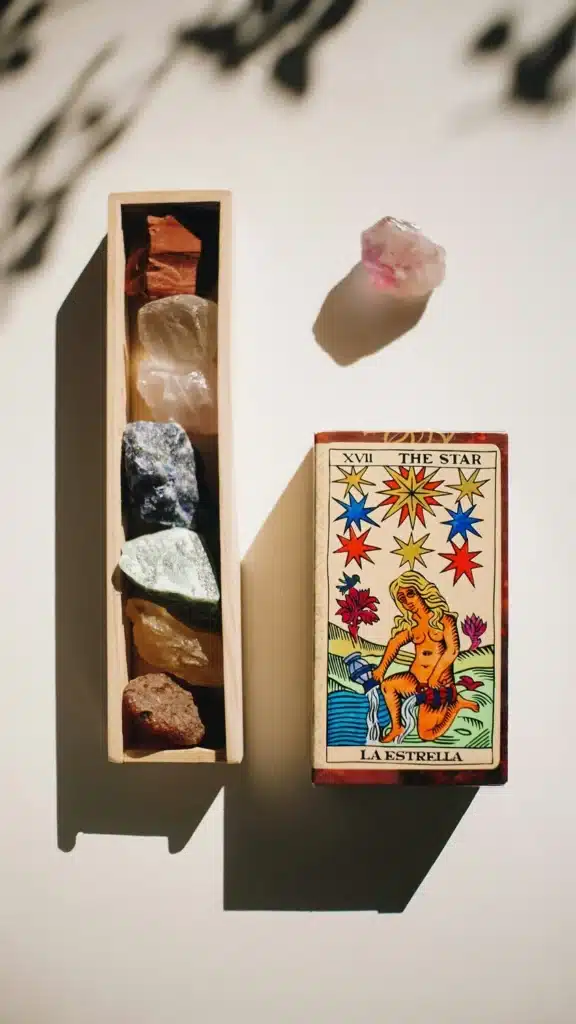
The limitations of yes or no questions in Tarot
Yes or no questions in tarot are limiting: they don’t consider that the interpretation of Tarot is heavily influenced by the person reading the cards and the specific context of the question asked.
Each card has a range of possible meanings, and their combination forms a unique picture that requires personal and intuitive understanding. This means that what may appear as a “yes” or “no” to one person may be interpreted differently by another, based on their experiences, insights, and unique perceptions.
The situations we encounter in life are often complex and nuanced, and seeking definitive answers through Tarot can be an illusion. Tarot cards provide us with insights into the current situation and possible future directions, but it’s important to remember that the choices we make and actions we take can influence the course of events.
Another reason why Tarot cannot provide straightforward “yes” or “no” answers is that it respects individuals’ autonomy and free will. Tarot is a tool for self-awareness and self-exploration, but it is up to us to make conscious and responsible decisions. What the cards can offer are guidance, suggestions, and an opportunity to reflect on our choices, but the final decision always rests in our hands.
Tarot is much more than a mere oracle providing dry “yes” or “no” answers. It is a tool rich in symbols, archetypes, and ancient wisdom that can help us explore the intricacies of life and gain a deeper understanding of ourselves and the situations we encounter.
Approaching Tarot with an open mind and a broader perspective allows us to embrace its richness and complexity, harnessing its potential for personal growth and inner discovery.
This is our perspective on yes or no tarot cards. Whether you agree or disagree, we welcome you to share your experiences or opinions on yes or no tarot reading in the comments below. Let’s kickstart a smart and enriching conversation!
Unveiling tarot’s psychological potential through Carl Jung’s insights
Tarot, often perceived as a mystical tool of divination, reveals a far deeper dimension when approached through a psychological lens. Beyond prediction, it functions as a symbolic system capable of reflecting the inner landscape of the individual.
As we highlighted in our article on the history of tarot, Carl Jung and Jodorowsky were two notable figures who regarded Tarot as a psychological tool. By delving into the theories of the renowned psychologist Carl Jung, we can understand why posing simple “yes” or “no” questions in Tarot limits its transformative potential.

Tarot cards tap into the realm of the unconscious mind, a concept central to Jungian psychology. The cards act as symbolic representations of archetypes, universal patterns that reside in our collective unconscious.
When engaging with Tarot, we embark on a journey of self-discovery, uncovering aspects of our psyche that may be hidden or repressed. By reducing Tarot to “yes” or “no” answers, we overlook the opportunity for deeper exploration and understanding of our inner world.
Jung’s concept of synchronicity further illuminates this perspective. Synchronicity refers to meaningful coincidences that connect inner psychological states with outer events. In a tarot reading, synchronicity manifests when the drawn cards mirror the individual’s inner condition or the deeper pattern unfolding in their life. The accuracy of Tarot, in this sense, lies not in prediction but in meaningful alignment.
By engaging in a more open-ended exploration with Tarot, we allow synchronistic connections to unfold, offering profound insights and guidance beyond mere “yes” or “no” answers. It is through this synchronistic interplay that Tarot can illuminate hidden aspects of ourselves and provide valuable psychological perspectives.
Jung also described individuation as the integration of opposing forces within the self. Tarot imagery, rich with contrasts, light and shadow, masculine and feminine, conscious and unconscious, reflects this dynamic process. The cards do not impose answers; they reveal tensions, potentials, and pathways toward integration.
By transcending the limitations of binary answers, we allow Tarot to reveal deeper insights into our unconscious motivations, desires, and patterns of behavior. Incorporating Carl Jung’s concepts of symbolism, synchronicity, and the integration of opposites, we unlock the transformative power of Tarot as a profound psychological tool.
Carl Jung’s view: symbols transcend oracle-like notions
Tarot cards derive their power from symbolism. Jung emphasized that symbols act as bridges between conscious awareness and the unconscious realm. They are not fixed signs delivering predetermined outcomes, but living images that evoke personal meaning and collective resonance.
Symbols do not function as oracles; rather, they manifest collective knowledge and archetypal representations. They serve as a catalyst for deeper insights and can guide us towards making conscious decisions. Posing a binary question oversimplifies the intricate tapestry of symbols present in the cards and limits our potential for self-reflection and growth.
We adhere to Carl Jung’s viewpoint and place great importance on symbols. That’s why in every article we publish about tarot card meanings, we provide both upright and reversed meanings, as well as explanations of key symbols. Occasionally, we delve into the historical significance behind these symbols, which adds an intriguing layer to understanding the complexity of each card – and ourselves!
If you’re intrigued by Carl Jung’s perspective on tarot, click here to discover more about it. Alternatively, if you’d like to share your own point of view, please leave a comment below. We’re eager to engage with you!
Final Thoughts: Is Yes or No Tarot Reading Truly Accurate?
So, is a yes or no tarot reading accurate?
It can offer orientation, but it cannot capture the full depth of a situation. When used as a quick method for gaining initial clarity, it may feel helpful and direct. However, tarot is not designed to function as a rigid predictive system. Its true precision lies in symbolic interpretation, psychological reflection, and contextual understanding.
Binary answers may satisfy the mind’s desire for certainty, yet tarot operates within nuance. A single card does not simply confirm or deny, it reveals dynamics, timing, emotional readiness, and unconscious influences shaping the outcome.
If the goal is absolute prediction, yes or no tarot reading may appear limited. But if the goal is awareness, alignment, and deeper insight, tarot becomes remarkably accurate in a different sense: it reflects what is unfolding beneath the surface.
Ultimately, tarot does not decide for us. It illuminates. And within that illumination, clarity emerges, not as a fixed “yes” or “no,” but as understanding.