
Judgement Tarot Card

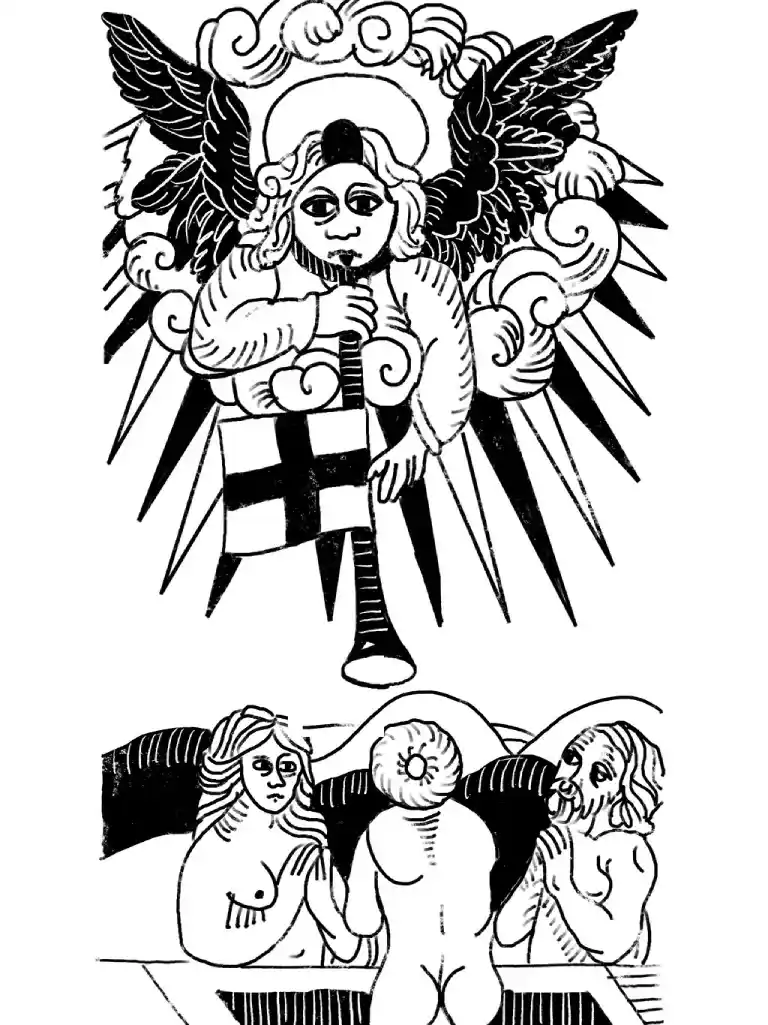
Judgement card from the Marseille tarot, black and white.

Symbols

Angel, Trumpet, Rising figures, Cross, Water, Mountains, Clouds

Qualities

Transformation, Renewal, Rebirth, Awakening, Self-Reflection, Forgiveness, Liberation, Clarity

Symbology

Judgment heralds a profound awakening and transformation. This card calls upon individuals to confront their past, embrace renewal, and embark on a journey of self-discovery.
The Rider-Waite’s Judgment card encapsulates the profound themes of rebirth and spiritual awakening. At its center, the triumphant angel, identified as the archangel Gabriel, extends wings and resonant trumpet, heralding a call to awakening. Naked figures – women, men, and children – emerge from graves, responding to Gabriel’s trumpet call. This visual tableau symbolizes the reawakening of the soul, marking the transcendence inherent in this card.
This moment is the final judgment, where individuals confront their destinies, determining whether they ascend to heaven or descend to hell. Outstretched arms convey readiness for universal judgment, emphasizing the gravity of this profound reckoning.

The allegorical richness of the Judgment card extends to its visual narrative, exploring themes of introspection and redemption. Massive mountains in the background emphasize the unavoidable and final nature of judgment, echoing the winter theme akin to The Hermit tarot card, marking a symbolic end.

Rooted in Christian imagery, the traditional scene mirrors the Resurrection and Last Judgment. The sleeping dead emerge from graves, echoing the Biblical resonance found in Revelation chapter 20, where the sea yields its dead.
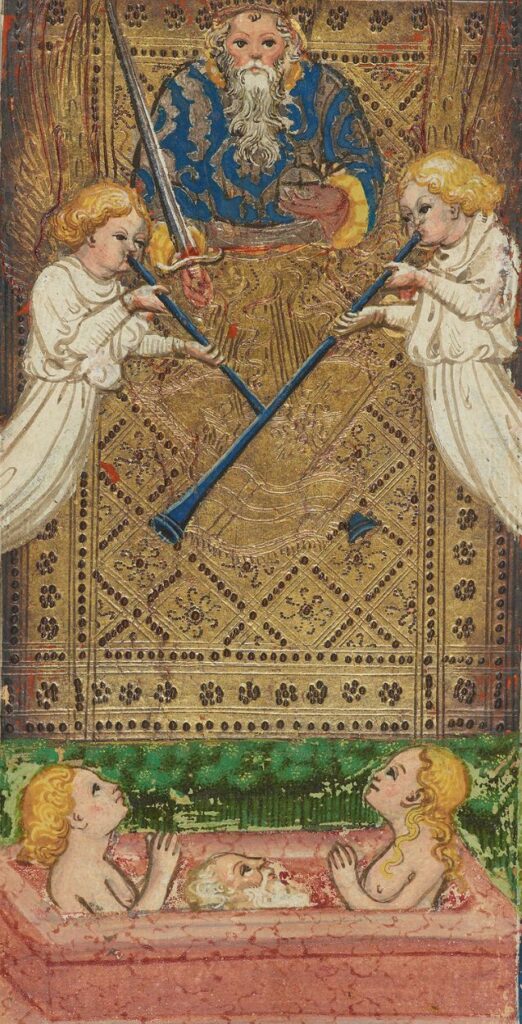
The Judgement card from the 15th-century Visconti-Sforza tarot, showing an angel blowing a trumpet as figures rise from graves.
The Judgement card in the Visconti-Sforza tarot deck.
The Judgement card from the Rider-Waite tarot, showing an angel sounding a trumpet with people rising from coffins.
The Judgement card in the Rider-Waite tarot deck.

Meanings & Keywords

The Judgment tarot card reveals a tapestry woven with themes of renewal, redemption, and self-examination. Let’s explore its upright and reversed meanings separately.

Upright Meaning

In its upright position, the Judgment card symbolizes rebirth and transcendence. It calls individuals to awaken, rise from introspection, and embrace renewed purpose – akin to figures rising from graves. Representing a phase of profound transformation, it prompts a thorough evaluation of past experiences and serves as a herald for the soul. It signals readiness for a higher state of consciousness.
The card invites reflection, urging us to recognize and reconsider our personal selves and paths. Reflecting on our current state aids in understanding the direction for future growth. The appearance of the Judgment card in a reading indicates the need for a different path, foretelling a forthcoming turning point. This shift might be related to a specific life field or be entirely life-changing.
More than often, the Judgment card signals a life-altering decision at a crossroads, making it crucial to tune into our Higher Self and trust our intuition. Making the best decisions requires connecting with our intuition and reflecting on past experiences to complete the metaphorical rebirth and transformation. It’s essential to acknowledge that this card is intricately connected with awakening and rebirth, suggesting a profound and transformative journey lies ahead.

Upright Keywords

Renewal – Reckoning – Awakening – Redemption – Judgment – Rebirth – Reflection – Transformation – Finality – Revelation

Reversed Meaning

In a reversed position, the Judgment card unfolds a different narrative, directing attention to contrasting aspects. Symbolizing potential feelings of delay, avoidance, or resistance, it highlights a reluctance to heed the transformative call it embodies.
This reversed state suggests a hesitancy to acknowledge the necessity for introspection and change. It acts as a cautionary signal against neglecting crucial guidance, leading to stagnation or fear of judgment. The Universe attempts to convey a message and extends an invitation, but perhaps due to apprehension, it goes unheard. The guidance persists, growing louder, a call from the universe that refuses to fade away.
Embracing the reversed Judgment card compels individuals to confront hesitations and actively engage in self-examination and renewal. The guidance exists for a reason, demanding a departure from fears and hesitations to embrace change. Judgment reversed may also point to an elevated inner critic, where negative self-messages hinder the path to rebirth and understanding the right next steps.

Reversed Keywords

Delay – Avoidance – Lack of Self-Acceptance – Denial – Unwillingness to Change – Ignoring a Wake-Up Call – Fear of Judgment – Unresolved Issues – Stagnation – Resistance

Key Symbols

Angel with the Trumpet

Prominently featured at the center of the Judgment card is a heraldic angel, acknowledged as the archangel Gabriel – God’s messenger. With outspread wings, this celestial being symbolizes the call to awakening. The angel, wielding a trumpet, signifies a wake-up call, a clarion reminder.
The angel gazes forward, enveloped in a gray cloud. In the Rider-Waite Tarot, the flag held by the angel is red and white, divided into four dials, each representing the four elements of nature. These elements find symbolism in the four animals of the World Tarot card (XXI). Additionally, the flag holds association with St. George’s flag, linked to the military saint.

It’s worth noting that the wings of the angel share the same color as those of the Angel in the Temperance tarot card.

Rising figures

In the Rider-Waite Tarot card, naked figures – women, men, and children – embody the transformative essence. Emerging from graves in response to Gabriel’s trumpet call, they symbolize a powerful rebirth and the awakening of the soul.
On the card’s first level, three figures seemingly form a family, echoed in the background by another trio – man, children, and woman – suggesting yet another family. This duality signifies the physical and the spiritual, underscoring that rebirth and awakening are achievable on both planes.

Mountains

The towering mountains in the background of the Rider-Waite Judgment card serve as a powerful reminder of the inescapable and conclusive nature of judgment. Their imposing presence underscores the finality of the decision at hand. The snow-capped peaks symbolize a shared theme across the tarot deck, reinforcing the interconnected narratives. These mountains also evoke imagery from The Fool card, with their white and blue hues reflecting similar colors. Moreover, their snowy appearance draws parallels to the mountains in The Hermit card, yet they are depicted closer than in The Moon card, illustrating the imminent conclusion of the journey.

More Tarot Insights

Born Under a Rising Sign

The definitive book on the Ascendant is out now.
Understand your Rising Sign like never before.