The Devil Tarot Card

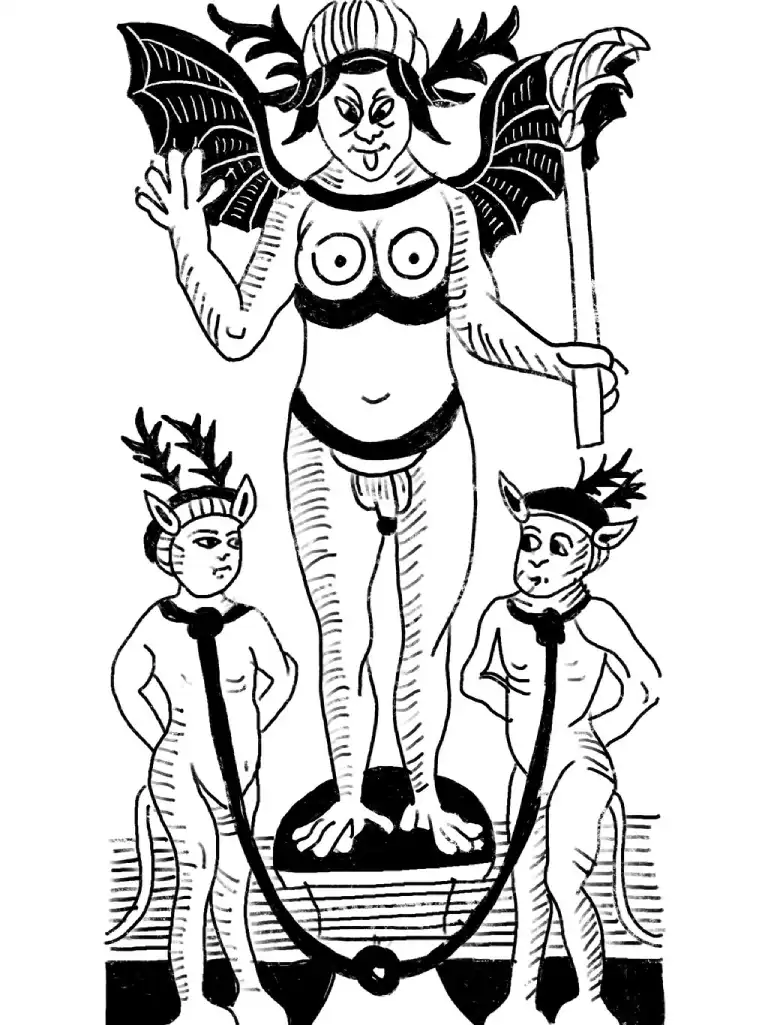
The Devil card from the Marseille tarot, black and white.

Symbols

Baphomet (goat-headed figure), Chains, Naked figures, Inverted pentagram, Bat wings, Fire, Grapes

Qualities

Temptation, Materialism, Bondage, Addiction, Shadow self, Fear, Control, Indulgence, Desire

Symbology

The Devil card, with its vibrant visuals, encourages seekers to confront their inner shadows and navigate the fine line between desire and control. It is deeply linked to passion and the primal forces that guide human actions.
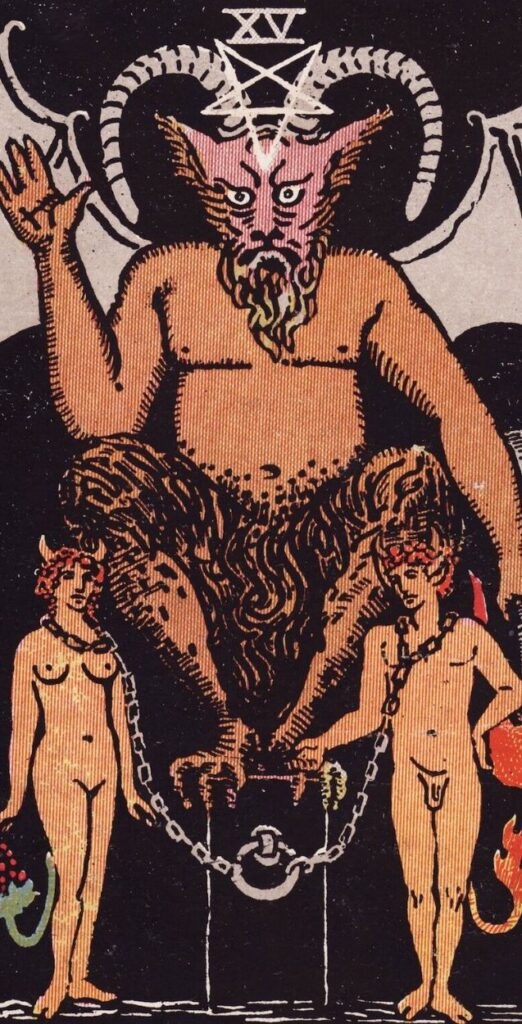
The Devil tarot card beckons, ushering seekers into the mystique of the occult within the Rider-Waite deck. Here, a captivating illustration unveils Baphomet – the Horned Goat of Mendes, a symbol echoing balance in various mystical traditions. This enigmatic creature, part man and part goat, is often entwined with notions of evil, its symbolism reframed in Christianity as a devil goat. Yet, within the occult, it holds diverse interpretations, occasionally seen as a deity or a demon.
Seated on a throne, the horned figure is a manifestation of earthly desires and the seduction of materialism. Bat wings grace this half-goat embodiment, weaving an aura of otherworldly allure. Delving into intricate details, the Devil card reveals an inverted pentagram on the creature’s forehead, a visual tether to darker energies.
Chains feature prominently in the imagery, binding two naked figures – a man and a woman – foregrounding the entrapment of earthly desires. The loose chains, depicted in the image, suggest escape is possible, yet the figures remain bound. Their transformation unfolds through subtle details: both sport little horns and tails reminiscent of the Devil. The man’s tail ablaze symbolizes a fiery addiction to power, while the woman’s tail, crowned with a bowl of grapes, speaks to a craving for life’s finer pleasures.
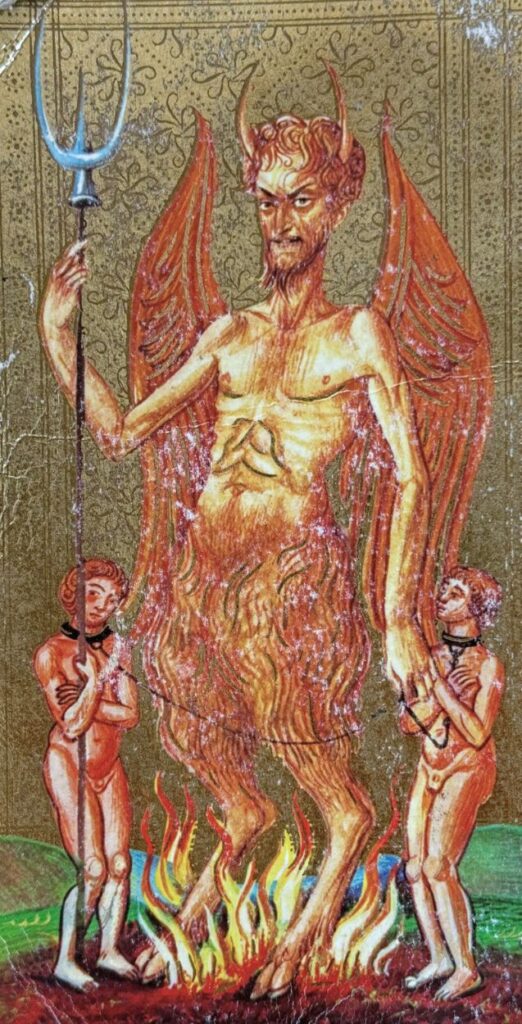
The Devil card from the 15th-century Visconti-Sforza tarot, showing a horned figure with wings and clawed feet.
The Devil card in the Visconti-Sforza tarot deck.
The Devil card from the Rider-Waite tarot, depicting a horned demon with a man and woman bound in chains.
The Devil card in the Rider-Waite tarot deck.

Meanings & Keywords

The Devil tarot card stands as a captivating symbol at the crossroads of earthly desires and spiritual exploration. It invites seekers to unravel the mysteries of the occult, delving into the shadows and temptations inherent in the human experience. Let’s plunge into the nuanced meanings of the Devil tarot card in a reading, exploring its significance in both the upright and reversed positions.

Upright Meaning

In its upright position, the Devil tarot card unfurls a rich tapestry of intense and nuanced meanings. At its core, this card serves as a potent symbol, revealing the irresistible allure of earthly temptations and the material realm. It acts as a mirror, reflecting our tendencies to become overly fixated on material things, status, or power.
The Devil, its upright stance, issues a challenge – one that compels us to confront the seductive powers capable of binding us. Whether it be to material possessions, unhealthy relationships, dependencies, bad habits, or unbridled passions, the card embodies the raw energy of primal instincts and unchecked desires. It urges us to traverse the delicate line between indulgence and self-destruction, beckoning seekers to acknowledge and navigate their innermost struggles.
However, the Devil in its upright position not only underscores the allure of these vices but also sheds light on feelings of emptiness and unfulfillment. This emotional landscape may signal a perceived lack of control in one’s life. Yet, just as the figures in the card are connected to the Devil by loose chains, the feeling of not having control is an illusion. Recognizing this illusion becomes the crucial first step toward transformation – a realization that empowers individuals to dismantle the chains of perceived helplessness.
Feeling like a slave to one’s own life, trapped, or restricted is a common theme highlighted by the Devil in the upright position. Yet, it’s essential to understand that, no matter how daunting the circumstances may seem, choices always exist to alter the trajectory. This card encourages seekers to embrace the power within themselves, reminding them that even in seemingly desperate situations, the agency to instigate change remains a potent force.

Upright Keywords

Temptation – Materialism – Bondage – Addiction – Passion – Desire – Shadow self – Hedonism – Power imbalance – Control – Illusions

Reversed Meaning

In its reversed position, the Devil tarot card offers profound insights into liberation and breaking free from self-imposed constraints. When the Devil appears inverted, it signals a release from the seductive chains that may have bound us in the past. This card suggests a period of detoxification, a moment to overcome addictive patterns, and a reprieve from the shackles of unhealthy relationships.
The Devil in reverse prompts a reevaluation of desires, encouraging seekers to question the sources of emptiness and unfulfillment in their lives. It signifies empowerment, emphasizing that the perceived lack of control is a mere illusion. As the figures in the card can escape the loose chains that connect them to the Devil, the reversed position underscores the potential for breaking free from self-imposed limitations.
This card reversed serves as a powerful reminder that even when circumstances seem overwhelming, choices exist to alter the trajectory. It invites individuals to shed illusions of feeling trapped or restricted, urging them to embrace their agency in shaping a new, liberated path.

Reversed Keywords

Liberation – Breaking free – Release – Redemption – Detoxification – Overcoming addiction – Reevaluating desires – Empowerment – Shedding illusions – Confronting shadows

Key Symbols

The Devil: Baphomet

Baphomet, seated regally on the throne, embodies the Horned Goat of Mendes, symbolizing balance in mystical traditions. This half-human, half-goat entity transcends duality, inviting seekers to explore harmony within chaos. Baphomet encapsulates dichotomies such as male and female, human and animal, as well as good and evil.

The connections between Baphomet’s position and other tarot cards are intriguing. In its divergence from The Hierophant, which blesses, the Devil seems to curse; notably, the Devil’s palm displays the planet Saturn, historically linked with complex influences that we now recognize as both challenging and beneficial.

Baphomet’s pose intriguingly mirrors the angel’s stance in The Lovers card. While The Lovers depict an angel overseeing a couple in a paradisiacal setting, symbolizing divine guidance, the Devil’s mirrored posture suggests a darker interpretation. This visual parallel highlights the dual nature of love: the divine love within The Lovers and the Devil’s challenge to navigate the intricate dance between desire and possessiveness.

In the depiction of the Devil, Baphomet features distinctive traits such as bat wings, donkey-like ears, and red skin, all symbols of associations with the burning depths of hell. Notably, Baphomet’s left hand clutches a downward-facing torch, subverting traditional religious objectives of bringing light into darkness.

Chains

The chains binding the two figures, a man and a woman, symbolize the intricate entanglement of earthly desires and material attachments. The paradox of the loose chains suggests the potential for liberation, prompting contemplation on the nature of self-imposed limitations. As these figures tread the delicate line between bondage and freedom, they serve as mirrors reflecting the complex dance of human temptation.

Pentagram

One of the pivotal symbols within the Devil tarot card is the inverted pentagram adorning the creature’s forehead. This potent emblem acts as a key, unlocking the realm of dark energies and primal forces. Its inversion challenges traditional interpretations, signifying a descent into the depths of the subconscious. As seekers gaze upon this symbol, they embark on a journey to unravel the mysteries concealed within the shadows.

More Tarot Insights

Born Under a Rising Sign

The definitive book on the Ascendant is out now.
Understand your Rising Sign like never before.