Astrology has enchanted humankind for millennia, but what exactly is it? Some describe it as an ancient science, others as the symbolic language of the universe. Here, we’ll clearly unpack what astrology truly means.
Our exploration blends historical perspectives with insights drawn from the remarkable book, History of Western Astrology: From Earliest Times to the Present, by Kocku von Stuckrad. This work profoundly shapes our viewpoint, offering a deeper understanding of astrology’s rich history and symbolism.
We’ll first provide a quick, accessible explanation for those seeking an immediate answer, and then dive deeper, offering a juicy, comprehensive look for those eager to explore astrology in all its complexity. Ready? Let’s begin!
What Is Astrology? A Basic Explanation
Astrology, whose name comes from the Greek, meaning “study of the stars”, examines the relationship between celestial movements and earthly experiences. In simpler terms, astrology interprets how the positions of planets and stars symbolically influence human lives and events.
Your zodiac sign, daily horoscope, and birth chart all come from astrology, offering you insights into your personality, life’s timing, and even potential paths. But astrology isn’t just about personal insights, it explores how cosmic energies impact everything on Earth.
This was your quick answer, but at Born Under Saturn, we prefer to dive deeper. So let’s go further and explore astrology in richer detail.
Going Deeper: What Astrology Truly Means
Earlier, we defined astrology as the study of how celestial phenomena connect symbolically with events on Earth. But astrology goes beyond daily horoscopes–it’s fundamentally a symbolic language, a profound system for interpreting our lives and the universe through cosmic patterns and cycles.
When astrologers read a birth chart, they decode this symbolic language. Each celestial body carries archetypal meanings. For instance, Mars represents action and passion, while Venus signifies love and harmony. By examining planetary relationships and their positions at specific moments, astrologers interpret energies and patterns that influence personal growth, relationships, and even major historical developments.
Astrology is a symbolic language, a system through which we can perceive reality.
Historically, astrology and astronomy – the mathematical study of celestial bodies – weren’t clearly separated. In ancient times, both were often grouped under “mathematics.” Astronomy provided scientific data on planetary movements, and astrology interpreted these movements symbolically. While modern astronomy has become strictly empirical, astrology remains rich in metaphor, intuition, and psychological depth.
Astrology is, therefore, fundamentally the art of interpreting the signs written in the heavens. These interpretations have always resonated deeply with religion and politics. Throughout history, astrologers advised rulers and leaders, influencing spiritual beliefs and political decisions. In medieval and early modern Europe, astrologers often found themselves navigating tensions between powerful patrons and cosmic symbolism.
In fact, astrology has existed since ancient times. If you’d like to explore its fascinating origins and evolution, dive into our article on The History of Astrology.
Astrology Within Esoteric Traditions
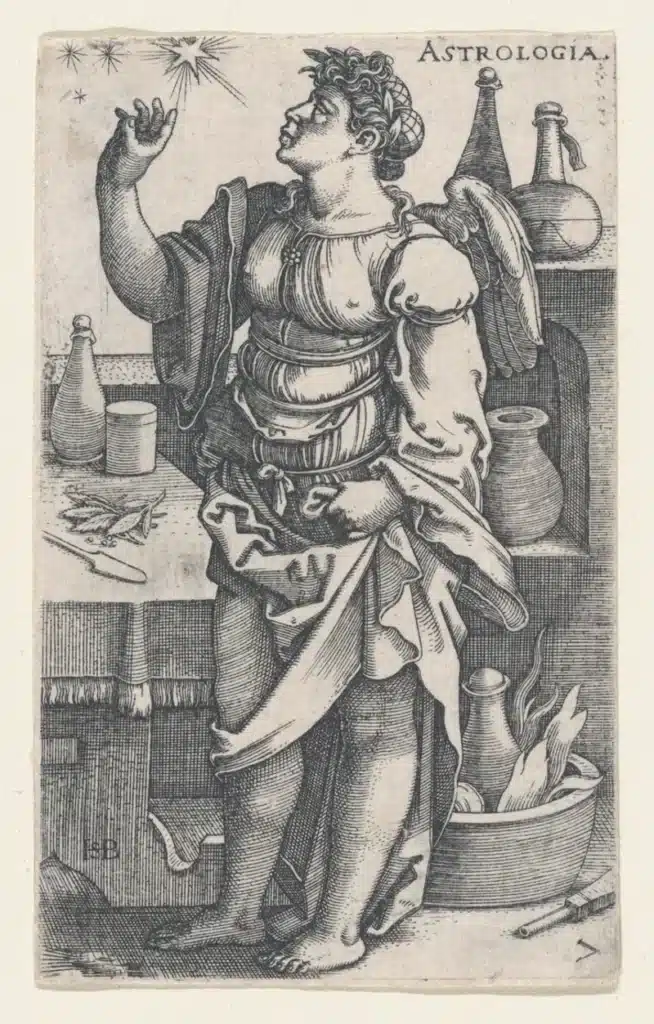
Astrology is a cornerstone of esoteric traditions, closely intertwined with alchemy, tarot, Kabbalah, and Hermetic teachings. It provides practitioners with a symbolic structure for exploring spiritual, psychological, and metaphysical truths.
But before we discuss astrology’s role in esotericism, let’s clarify what esotericism actually means today, because there’s often confusion. Many still imagine esotericism (from the Greek esôterikos, meaning “inner”) as secret knowledge available only to a select, initiated few. Yet, in our modern world, nothing could be further from the truth.
Today, esoteric teachings, including astrology, are openly accessible. Rather, as Antoine Faivre, professor of esotericism at the Sorbonne in Paris, suggests, esotericism is a “form of thought”, a way of interpreting reality symbolically.
Returning to astrology: from an esoteric viewpoint, astrology isn’t simply about reading planetary positions. It’s about perceiving universal patterns, understanding spiritual lessons, and embarking on a journey of self-realization. Seen in this way, astrology is not just symbolic, it’s profoundly complete.
Who Created Astrology?
Astrology doesn’t have a single founder, it’s a collective creation that emerged gradually from ancient human curiosity. Its roots stretch back over 4,000 years, beginning in Mesopotamia, where early sky-watchers first noticed connections between celestial events and earthly life.
From there, astrology spread to Egypt, where it absorbed mystical symbolism; to ancient Greece, where philosophy deepened its meanings; to India, where it flourished uniquely as Vedic astrology; and into the Islamic world, where scholars developed precise methods still used today.
Every culture enriched astrology with its distinct wisdom, symbols, and techniques, turning it into a vibrant mosaic shaped by countless generations across diverse civilizations.
Is There Any Truth to Astrology?
We’ve covered astrology from multiple perspectives, including historical and symbolic angles. Still, some naturally wonder if astrology holds any real truth, especially since it’s symbolic rather than scientific. If you have doubts, we completely understand, astrology can feel elusive or unclear if it doesn’t resonate personally.
Here’s our take: Astrology isn’t about rigid predictions or absolute truths; it’s a symbolic language offering guidance rather than literal facts. While mainstream science typically labels astrology as pseudoscience, countless people genuinely benefit from its psychological insights, intuitive wisdom, and metaphoric depth. Astrology’s truth, therefore, lies in the clarity, self-awareness, and personal revelations it inspires.
And to anyone who thinks something isn’t real if it isn’t scientific, we gently remind you that even science has its limits. Just think: how many things considered scientifically impossible fifty years ago are well understood today? And how many mysteries remain beyond current scientific understanding?Science is incredibly valuable, but it doesn’t yet, and might never, explain everything.
Astrology and science aren’t competitors. They simply represent two different ways to explore and interpret reality, each valuable in its own right.
So, How Does Astrology Work?
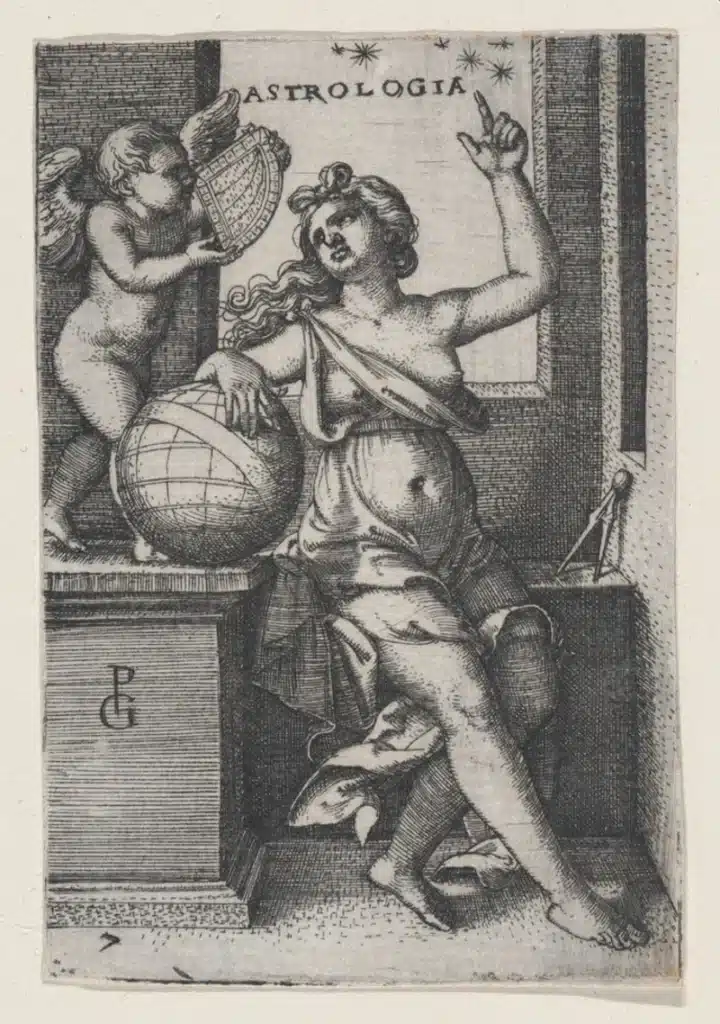
Astrology interprets the positions and interactions of planets and stars at precise moments, such as your birth or any significant life event. Each celestial body embodies specific themes and energies. Your natal chart (or birth chart) is essentially a personalized map of these energies, revealing your personality traits, life patterns, challenges, and potential opportunities. Similarly, the current sky chart provides insights into collective energies and global dynamics unfolding right now.
If you’d like to dive deeper into astrology, its fascinating history, evolution, and profound impact on our world –we highly recommend History of Western Astrology: From Earliest Times to the Present by Kocku von Stuckrad.
Or, if you’re looking for quick, intuitive astrological insights, follow us on Instagram at @born_under_saturn_.