
Neptune

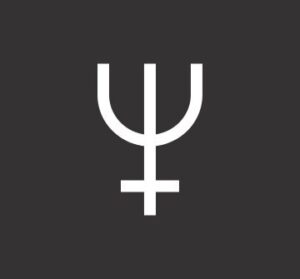
Neptune astrology symbol in white on a dark background.
Neptune’s space is vast, boundless, and undefinable, mirroring the endless and mysterious expanse of the universe itself.

CYCLE

165 YEARS

STAYS IN EACH SIGN

14 YEARS

RULES

EXALTED

FALL

NATURAL HOUSE

BODY PART

Feet - Hormones

Neptune Meaning

Neptune represents dissolution, imagination, and the dimension where boundaries lose definition. It operates beyond logic, through perception, intuition, and inner vision. Not what is clearly seen, but what is sensed, imagined, and felt.

Where other planets define and separate, Neptune blurs. It dissolves distinctions, opening a space where everything can merge into a broader sense of unity. In this realm, identity becomes fluid, and experience extends beyond the limits of form.

It governs dreams, creativity, and altered states of consciousness (even drugs). The ability to envision what does not yet exist, to access symbolic meaning, and to connect with something intangible but deeply real. This is the same principle at work when you are absorbed in a film, lost in music, or carried into another reality by imagination. Neptune does not just create images, it allows you to enter them.

It reflects how you engage with inspiration, spirituality, and the search for a reality that transcends the ordinary. But this same openness carries ambiguity. Neptune is not only vision, but also distortion. It can elevate perception into insight, or blur it into confusion. It reveals how you relate to idealism, to escapism, and to the tension between what is real and what is imagined.

Its nature is difficult to define. Like the ocean or the cosmos, it resists clear limits. Neptune represents the impulse to move beyond structure, toward something infinite, where meaning is not fixed, but experienced.

At its core, Neptune is the principle of transcendence. The force that dissolves the boundaries of the self, allowing connection with something greater. Whether this becomes clarity or disorientation depends on how consciously it is lived.

Neptune Key Themes

  • Dreams and Imagination
  • Illusion and Disillusion
  • Spirituality and Transcendence
  • Compassion and Empathy
  • Escape and Avoidance
  • Creativity and Vision
  • Intuition and Sensitivity
  • Dissolution and Surrender
  • Mysticism and the Unseen

Neptune Archetype

Neptune is the archetype of the dreamer and the visionary. It represents the impulse to transcend reality, to move beyond the visible, and to dissolve into something greater than the self.

This archetype does not seek clarity. It seeks meaning beyond form. It moves through feeling, vision, and inner experience rather than structure or action.

At a deeper level, Neptune is tied to surrender. The ability to release control, to soften identity, and to enter a state where separation no longer defines experience. But this same movement carries risk. Without grounding, transcendence becomes confusion. Vision becomes illusion.

Neptune does not distinguish between what is real and what is imagined. It opens the door to both.

Neptune Symbol: ♆

The symbol of Neptune is formed by a trident rising above a cross.

The cross represents matter, grounding, and the reality of existence, while the three-pronged trident extends upward, expressing the urge to move beyond those limits.

The trident reflects a triplicity, often interpreted as spirit, soul, and body, or as different layers of perception reaching beyond the visible. It is not a single direction, but an opening, a force that expands awareness rather than containing it.

Derived from the weapon of Neptune (Poseidon), god of the sea, the symbol carries both power and ambiguity. His trident governs the waters, but also the hidden movements beneath them, suggesting forces that can sustain, overwhelm, or destabilize.

Like the ocean itself, this glyph holds a dual nature. It can nourish or dissolve, reveal or obscure. The cross anchors experience in reality, while the trident reaches toward what cannot be fully defined or controlled.

Neptune Mythology

Neptune, known as Poseidon in Greek mythology, is the god of the sea, the depths, and the forces that cannot be controlled.

He rules a realm that is vast, shifting, and unstable. Unlike the ordered authority of Zeus or the rigid structure of Saturn, Poseidon governs what moves beneath the surface, the hidden currents that shape reality without being seen.

His power is absolute, but not predictable. With his trident, he can calm the waters or unleash storms, reflecting a force that creates and disrupts in equal measure.

In Roman tradition, Neptune retains this association with water, but also becomes linked to movement and the unseen forces that guide life forward.

This mythology reflects a deeper pattern. What cannot be contained cannot be controlled. And what is repressed beneath the surface does not disappear, it eventually rises.

Neptune in Transits

Neptune moves slowly, spending around 14 years in each sign. Its influence is generational, shaping collective perception more than immediate events.

These transits do not act through sudden disruption, but through gradual diffusion. Reality shifts subtly. Boundaries soften. Perception changes over time rather than through clear turning points.

At a personal level, these phases often mark moments where identity softens and deeper meaning is sought. They invite surrender, but also require discernment. Without awareness, it becomes easy to idealize, escape, or lose direction.

Neptune is now moving through Aries, marking the beginning of a new cycle where imagination meets action, and where vision seeks expression in the real world. To explore this shift in depth, read our full guide on Neptune in Aries from 2025 to 2039

To understand how Neptune is influencing your perception and direction right now, track its movement in your chart using our birth chart and transits calculator.

Neptune in the Birth Chart

Neptune is a transpersonal planet, influencing both the individual and the collective.

Its sign reflects a generational approach to imagination, spirituality, and perception. Its house shows where this influence becomes personal.

This is where clarity may be less defined. Where intuition is stronger, but boundaries may be weaker.

Neptune in the chart reveals how you dream, how you escape, and how you connect to something beyond the material world.

It shows both your capacity for vision and your tendency toward illusion.

Want to know Your Neptune?

Use our free birth chart calculator to discover your Neptune sign, house, and aspects with precise data.

Neptune in the Signs

Neptune is a generational planet, changing signs approximately every 14 years. This means its influence is shared across entire age groups, shaping collective ideals, imagination, and ways of perceiving reality.

Rather than describing individual personality, Neptune’s sign reflects a broader atmosphere. A way a generation dreams, escapes, believes, and interprets meaning beyond the visible world.

Its influence becomes personal through house placement and aspects, but its sign sets the background. A collective lens through which reality is filtered.

  • Neptune in Aries: vision through action and identity
  • Neptune in Taurus: illusion and inspiration in values and stability
  • Neptune in Gemini: imagination through communication and ideas
  • Neptune in Cancer: emotional sensitivity and intuitive depth
  • Neptune in Leo: creative vision and idealized self-expression
  • Neptune in Virgo: blurred boundaries in logic and structure
  • Neptune in Libra: idealization in relationships and harmony
  • Neptune in Scorpio: deep transformation and psychological intensity
  • Neptune in Sagittarius: spiritual exploration and belief systems
  • Neptune in Capricorn: dissolution of structures and authority
  • Neptune in Aquarius: collective vision and future imagination
  • Neptune in Pisces: pure intuition, dissolution, and spiritual merging

To explore how Neptune has shaped entire generations, read our full analysis: How Neptune Shaped Humanity Over the Past 50 Years.

Neptune in the Houses

Neptune’s sign reflects a collective influence. Its house is where that influence becomes personal.

This is where Neptune’s themes, imagination, intuition, confusion, or idealization, take shape in your life. It shows the area where boundaries are less defined, where perception becomes fluid, and where vision can either inspire or distort.

That’s why the house placement is essential. It reveals where your insights, illusions, and deeper sensitivities are actually experienced.

Neptune is only one piece of your chart...

To truly understand your intuition, your imagination, and where clarity can blur, you need to see your full birth chart.

A complete reading reveals how your placements interact, where they support each other, and where they create tension.

50% OFF + 3 FREE MINUTES

Strong or Weak Neptune

The strength of Neptune depends on its sign, house, and aspects.

When Neptune is strong, imagination and intuition are accessible and integrated. There is creativity, empathy, and the ability to perceive beyond the surface without losing grounding.

When Neptune is challenged, boundaries become unclear. There may be confusion, escapism, or difficulty distinguishing reality from projection. This does not remove its influence, but makes it harder to navigate. Vision remains, but without structure, it can become disorientation.

Neptune and Escapism

Neptune does not only elevate. It also dissolves.

It shows how you distance yourself from reality when reality feels limiting. This can manifest as imagination, art, spirituality, or, when unconscious, avoidance.

Escapism is not inherently negative. It becomes problematic when it replaces engagement rather than expanding perception.

This is where Neptune becomes visible in daily life. In the ways you drift, idealize, disconnect, or seek refuge. It reveals not only where you escape, but why.

From Our Editorial

Latest Transits

Subscribe to Get Our Newsletter