
Here, we’ll explore the intense Grand Cross (or Grand Square): a powerful astrological aspect that forms a striking cross-like pattern in the chart. We’ll delve into its meaning, examine real examples, and even connect it with art.
If you have this aspect in your birth chart or questions about it, share your placements in the comments. We’d love to hear from you.
What is a Grand Cross in Astrology?
A Grand Cross, also known as a Grand Square, is one of the most complex and dynamic aspects in astrology. It occurs when four planets are linked by a network of squares and oppositions, creating a cross-like pattern in the chart.
The planets are spaced at roughly 90-degree intervals, with two pairs standing in opposition (180 degrees apart). This configuration generates intense tension, but also a strong potential for transformation.
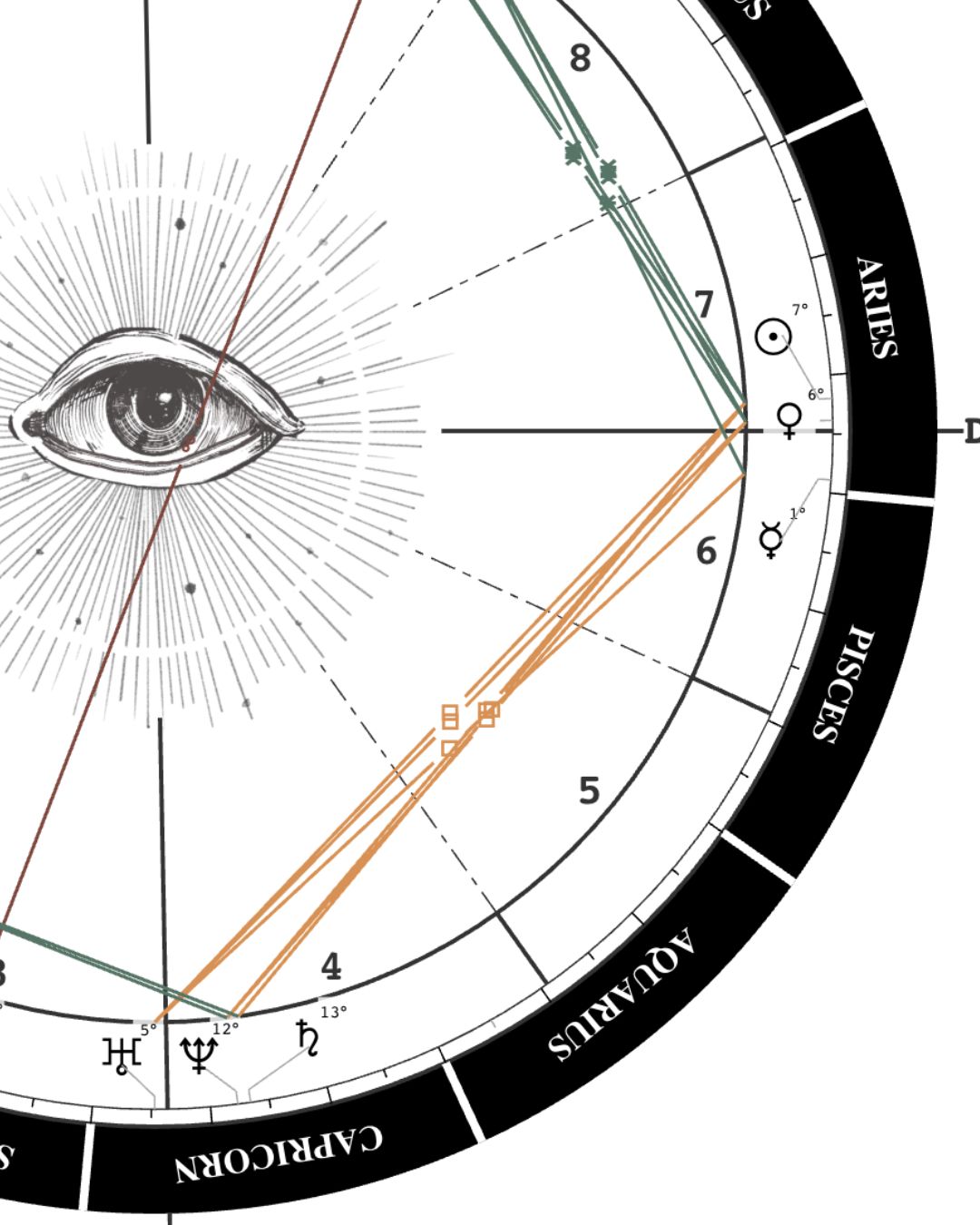
To better understand it, let’s look at an example: the birth chart of American actress and singer Hilary Duff. Born on September 28, 1987, at 3:56 PM, Duff’s chart presents a clear example of a Grand Cross.

In her chart, the Grand Cross is formed by the following points:
- Neptune in 5° Capricorn
- North Node in 2° Aries
- Chiron in 28° Gemini
- Sun in 5° Libra
This configuration highlights the tension between different areas of life, pushing Duff to work through challenges related to her identity, life direction, and healing.
For example, her Sun in Libra (self-expression) opposes Chiron in Gemini (wounds and communication), while Neptune in Capricorn (dreams and ambitions) squares North Node in Aries (life purpose).
These opposing and squaring forces create ongoing internal pressure and recurring life challenges, but they also offer tremendous potential for personal growth and development.

Are the Grand Cross and Grand Square the same?
Yes, the terms “Grand Cross” and “Grand Square” refer to the same astrological aspect.
“Grand Square” emphasizes the technical structure of square aspects, while “Grand Cross” reflects the visual and symbolic experience of the configuration as it appears in the chart. Both terms describe the same network of squares and oppositions, and are used interchangeably in astrological practice.
Is a Grand Cross good or bad?
A common question in astrology is whether a Grand Cross is “good” or “bad.” Like most astrological configurations, the answer is nuanced.
A Grand Cross is often linked with challenge, but it is not negative by nature. The combination of squares and oppositions creates constant tension that does not resolve on its own. Instead, it pushes a person to engage directly with competing needs, impulses, or life areas.
People with a Grand Cross in their birth chart often feel pulled in different directions. Periods of frustration or inner pressure are common, especially when trying to balance conflicting priorities. Over time, however, this same pressure can become a source of strength.
When someone learns to work with the tension instead of resisting it, the Grand Cross can build resilience, self-awareness, and deep personal growth.
Why are Grand Crosses challenging aspects?
Grand Crosses are challenging because all four planets involved are equally activated, with no single point where tension can be released.
Each planet pulls with comparable force, creating a persistent state of internal pressure that demands constant adjustment. In practice, this often manifests as competing priorities across different areas of life.
Grand Crosses create an internal tug-of-war between the planets involved.
For example, a Grand Cross involving the Sun, Moon, Mars, and Saturn may generate tension between identity, emotional needs, action, and responsibility. This can make it difficult to fully satisfy one area without activating friction in another, as the planets continuously push against one another.
Over time, however, this sustained pressure can become formative rather than destabilizing. The repeated effort to reconcile opposing forces often leads to greater self-awareness, emotional maturity, and a deeper understanding of personal limits and strengths.
Types of Grand Crosses by Modality
In astrology, Grand Crosses can be classified into three types based on the modalities: Cardinal, Fixed, and Mutable. Each type of Grand Cross has distinct characteristics and influences, depending on the nature of the modalities involved.
Cardinal Grand Cross
A Cardinal Grand Cross involves planets in the cardinal signs: Aries, Cancer, Libra, and Capricorn.
Cardinal energy is about initiation, leadership, and action. A Cardinal Grand Cross creates strong internal tension that pushes a person to take charge and make bold moves. The challenge is learning to balance the urge to act with patience and long-term strategy.
People with a Cardinal Grand Cross may feel constantly driven to start new projects or take the lead, but they can struggle with follow-through. This aspect challenges them to focus on completing tasks and managing their time effectively.
Fixed Grand Cross
A Fixed Grand Cross involves planets in the fixed signs: Taurus, Leo, Scorpio, and Aquarius.
Fixed signs are known for their stability, determination, and resistance to change. As a result, a Fixed Grand Cross creates a strong sense of persistence but also a tendency toward stubbornness and rigidity.
The challenge for individuals with a Fixed Grand Cross is learning to adapt and embrace flexibility. They may feel trapped in a situation or mindset, finding it difficult to move forward or let go. However, once they learn to balance their determination with openness to change, they can achieve incredible growth and stability.
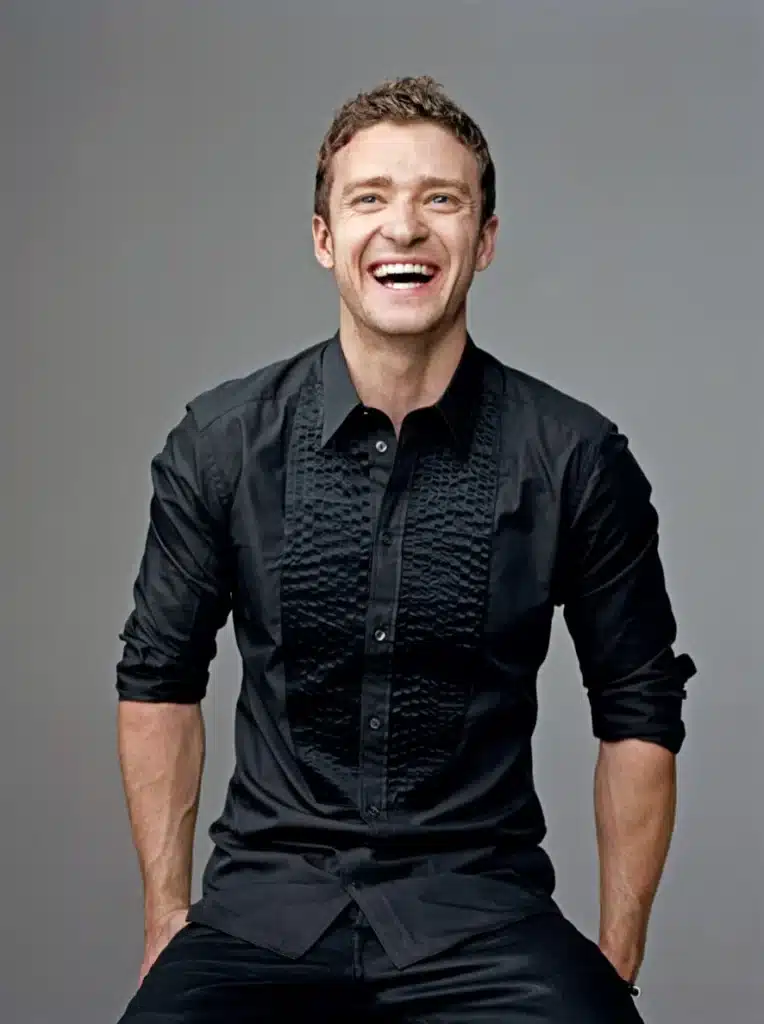
Justin Timberlake has a Fixed Grand Cross configuration in his astrological chart.
Mutable Grand Cross
A Mutable Grand Cross involves planets in the mutable signs: Gemini, Virgo, Sagittarius, and Pisces.
Mutable energy is adaptable, flexible, and changeable, which makes a Mutable Grand Cross highly dynamic but also somewhat scattered.
Those with a Mutable Grand Cross may struggle with indecision or a lack of focus, constantly shifting between different interests or ideas. However, this aspect also allows them to be highly versatile and adaptable. The challenge is to harness this energy in a way that brings clarity and direction.
How rare is a Grand Cross?
Grand Crosses are relatively rare. This is because it requires four planets to be in specific positions within the chart, forming a square and two oppositions.
The rarity of a Grand Cross also depends on the types of planets involved. For instance, slower-moving outer planets like Neptune, Uranus, and Pluto take many years to shift from one sign to another, making a Grand Cross involving these planets even less common.
Of course, there can be many astrological elements if we include those considered “minor” (that is, beyond the planets). We are referring to asteroids, Arabic points, angles, and fixed stars. Therefore, the more elements we decide to include in the calculation of the natal chart, the greater the possibility that complex aspects like this one will occur.
How to tell if you have a Grand Cross in your chart
To determine if you have a Grand Cross in your natal chart, you’ll need to look for four planets forming a cross-like shape with two oppositions and four squares. The planets involved should be within the same modality (Cardinal, Fixed, or Mutable) and spaced evenly at approximately 90-degree intervals.
Now, about that “approximately”: planets don’t need to be in exact degrees to form a Grand Cross. The aspect is still valid even if the planets are a few degrees off from perfect alignment. This slight deviation is called an “orb” in astrology.
Typically, an orb of up to 5-8 degrees is considered acceptable for squares and oppositions, meaning the planets can be slightly out of perfect alignment but still generate the powerful energy of a Grand Cross.
But different orbs of tolerance are considered depending on the planet or element, and also the aspect. Each astrologer throughout history has theorized, through study and experience, different tolerances. Therefore, our advice is to study and practice, and find your own comfort zone regarding how tolerant to be.
You can check for a Grand Cross by generating a natal chart using our free birth chart calculator. And even if you already have a calculator on hand, we suggest using ours for its unique, captivating design that enhances your astrological experience. You won’t be disappointed, we promise!
FAQs about the Grand Cross
Can Grand Crosses involve signs of different modalities?
While Grand Crosses are typically composed of planets within the same modality (Cardinal, Fixed, or Mutable), they can occasionally involve signs from different modalities. This situation may occur when planets are near the end or beginning of their signs, potentially straddling the boundaries between modalities. The aspects don’t have to be exact; as long as the planets are within the acceptable orb for squares and oppositions, the Grand Cross will function effectively. This variability in modality is independent of whether signs are intercepted in the chart.
What if all planets in a Grand Cross are fast-moving?
The more fast-moving planets are involved in a complex aspect like this, the more the aspect is felt on a character level. This is because the fast-moving planets are considered more defining for the individual, being that the slower planets are more generational.
Is it possible for the Grand Cross to involve only Slow Planets?
Yes, it is possible for a Grand Cross to involve only slow-moving planets (Jupiter, Saturn, Uranus, Neptune, Pluto).
When slow planets form a Grand Cross, it often signifies deep, long-lasting challenges and transformative experiences. Because slow planets influence broader and more generational themes, a Grand Cross with these planets can indicate significant life events, shifts in worldview, or major personal transformations. The impact of such a Grand Cross tends to be profound and can shape one’s life trajectory over a longer period.
How to know if there are Grand Crosses now in the sky?
Grand Crosses are not only present in birth charts but can also occur in the sky at any given moment, just like other aspects. To find out if a Grand Cross is currently forming, use astrology software that tracks planetary positions and aspects.
Learning the Grand Cross through the lens of Art
Since here on Born Under Saturn we love to blend astrology with art, we’ll apply the same approach to this topic. Our goal is to make the meaning of a Grand Cross visually memorable. By connecting it with art, we provide a different lens through which to understand and learn this powerful astrological aspect.
Imagine the Grand Cross in astrology as a dramatic painting, much like Vincent van Gogh’s “Starry Night.” This iconic artwork embodies the intense and dynamic energy of the Grand Cross through its swirling, tumultuous skies and bold, contrasting colors.
In “Starry Night,” the sky is filled with turbulent energy and complex patterns, mirroring the high tension and transformative potential of a Grand Cross.
Just as the painting expresses a whirlwind of emotion and movement, a Grand Cross represents a powerful planetary alignment. The cross-like pattern in the chart symbolizes tension, conflict, and the pressure to evolve.
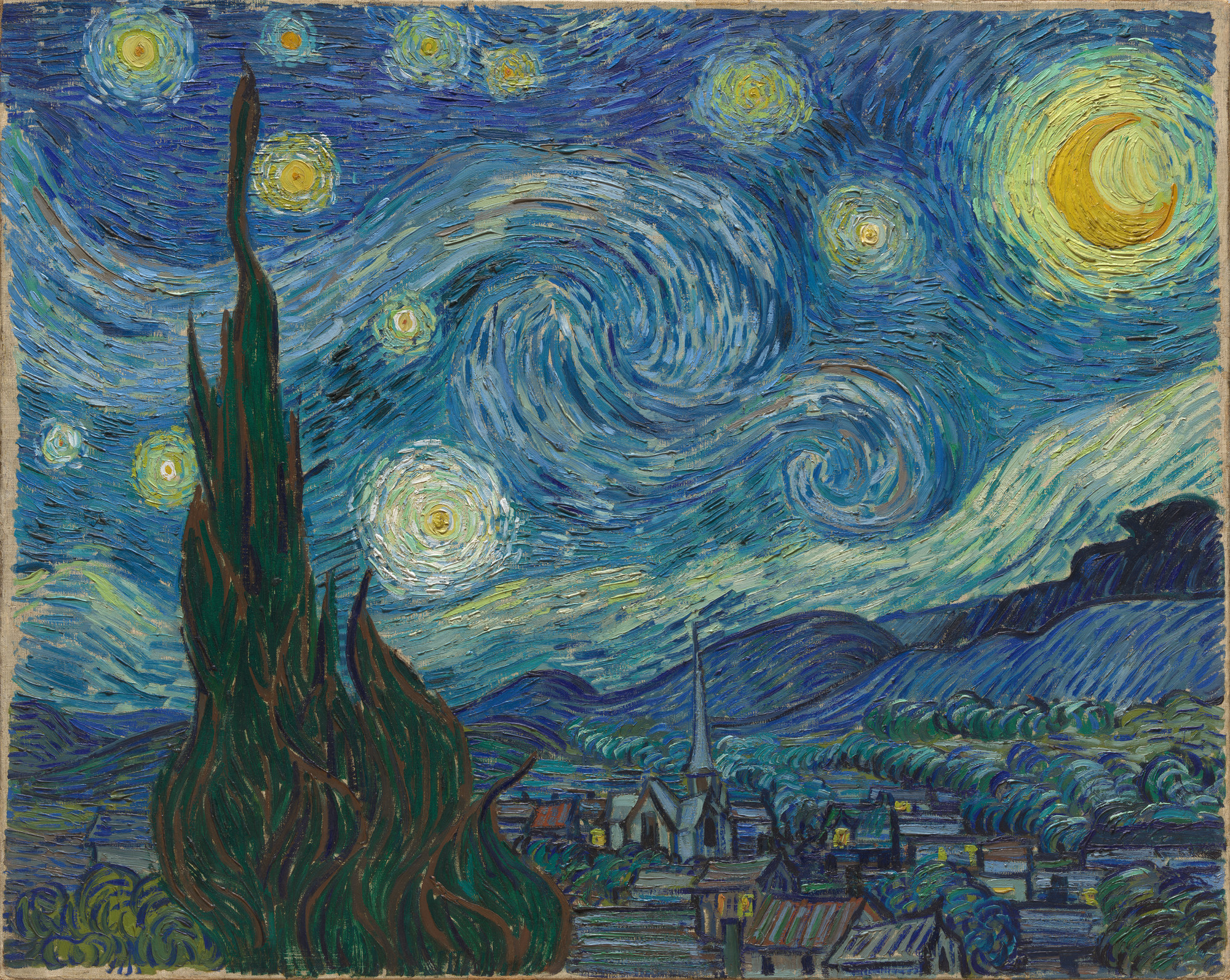
The painting’s swirling, intersecting lines reflect the squares and oppositions of the Grand Cross, where different elements clash and interact. The bold contrasts in color and movement symbolize the intense energies and conflicts of a Grand Cross, pushing the viewer to confront and resolve the tension portrayed.
In both the artwork and the astrological aspect, there is an underlying beauty in the chaos. The Grand Cross, while challenging, offers profound opportunities for growth and transformation. Similarly, “Starry Night” invites viewers to find beauty and meaning within the turbulence, highlighting how struggles and conflicts can lead to powerful and creative expressions.
By viewing the Grand Cross through the lens of art, we can appreciate the intricate and dynamic nature of this astrological aspect, recognizing that, like great art, it has the potential to inspire and transform us through its complexity and intensity.